From what I gather, we're going to physically carry around a USB stick with a personal code tied to us individually to identify ourselves when we access internet content?
That's the surveilance state's wet dream meng. No thanks, I'd rather spend twice as much time and effort on the CAPTCHAs.
At least in theory the key in the USB stick wouldn't be personally identifiable. In practice we know "someone" will find an exploit on that, and associate keys and people.
It's not much effort to go from that anonymous, but unique identifier, to a person. It only takes using that identifier on a website that knows how you are, like Amazon, Facebook, Ebay, etc or pairing that with an advertising cookie to determine who you are. You'd be surprised how much personal information online-advertisers have on an average internet user, even the ones who are concerned about their privacy.
That was also [one of my primary concerns](https://ruqqus.com/+technology/post/bf3m/humanity-wastes-about-500-years-per/yil1). Like you said, this would be a wet-dream for advertisers and governments.
I had to do one the other day where it showed you 6 images of cartoon dartboards, and you had to click on the one where the darts added to 16, like this:
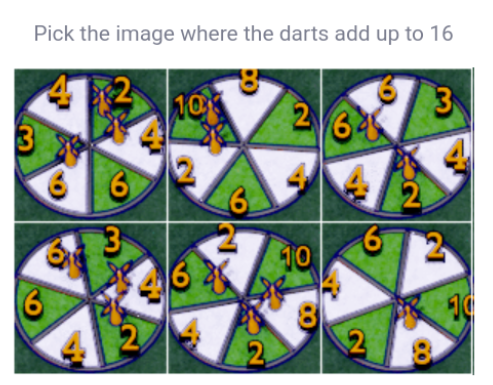
If you didn't do it fast enough, you had to start again:
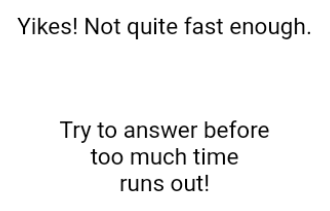
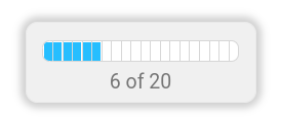
I found it quite difficult to do it accurately within the time limit, especially when it wanted me to do it 20 times:
And even after I had done all 20 and I was sure I did them all right, it told me I was wrong:
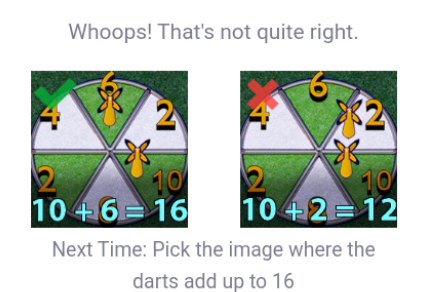
Absolutely ridiculous.
This is interesting, but I have a few concerns:
* What stops spammers from setting up several banks of these keys? It's not significantly different from how telemarketers buy hundreds or thousands of phone-numbers to place calls from.
* If the device has an unique identifier (which it appears to), it could be used to track a user across the internet, which is something advertisers and NSA types are very interested in doing.
On the flip-side, I'm happy to see attempts being made in this space. I won't hate on innovation (so long as it's not required) that has challenges to overcome. This first pass definitely needs more work and changes.
YubiKeys start at $40 so it would take lot to get up and running as a scammer, they’ll probably deauth your key if you’re found to be abusing it so replacing it is costly. A device like this absolutely needs to be anonymous otherwise me and everyone else will stick with captchas.
In order for someone to deauth your key, they have to be getting a personal identifier from it. Alternatively, they could create an encrypted protocol through which your yubikey would be told to disable itself if abuse is detected.
I am not worried about that. Security tokens are well established, I've had several Yubikeys for years, established makers will not compromise their products and open source alternatives (e.g. Nitrokey) exist.
The article is super dumb.
CAPTCHA 1.0 was to help computers to read books. There was a project by Google to scan every single known book in existence into the cloud so that society could have that knowledge forever. Generally the computer could perform OCR and turn that text into a digital format, but often times there were characters that the computer had a hard time understanding.
That's where the human came in. People were shown to snippets of text: one of the computer knew how to read as a test for the person and one the computer did not know how to read. The computer uses the person's response for the text it didn't know how to read to fill in the missing piece of the book.
CAPTCHA 2.0 it's the same premise: teaching computers how to recognize road signs, crosswalks, traffic lights, etc. But for self-driving cars. By having a large set of images that are labeled, deep neural networks can start learning what roads look like.
It's a win-win: sites get a free way of protecting against spam bots since computer algorithms cannot correctly process those images yet, and companies like Google get free labeled data sets for machine learning.
And if someone does come up with a bot to defeat captcha, society wins again because now there's an algorithm in existence to do the things that were previously hard for a computer to do.
Nah think about all the things google gives away for free like browsers and operating systems. Should google charge for https://developers.google.com/recaptcha ? They are also providing a valuable service.
It sounds bad when they phrase it like that, but making it sound as terrible as possible is probably the point.
However, take that 500 years, and consider that there are how many billions of people on the planet? So how much time does *each individual person* spend on CAPTCHAs? Because from a personal perspective I don't recall spending very much time at all. A couple minutes per year, at most, maybe?
Sounds like a lazy solution to the problem when they should just be putting more work into refining the CAPTCHA process.
The key thing sounds gay as hell. I've never taken anything close to a 32 second captcha. If you are telling me captcha will possibly remove from my life some bots *and* some lazy/impatient/retarded cunts? Sign me up; 1 captcha per letter on twitter please.
29 comments
20 u/None 17 May 2021 10:39
6 u/None 17 May 2021 11:00
6 u/WhoFlu 17 May 2021 11:22
4 u/None 17 May 2021 11:37
2 u/None 17 May 2021 14:04
1 u/WhoFlu 17 May 2021 11:25
3 u/None 17 May 2021 12:38
13 u/MyThoughtsAndOpinions 17 May 2021 10:50
18 u/Aurora 17 May 2021 11:28
3 u/Chuck_Steak 17 May 2021 11:30
3 u/SpaceJawa 17 May 2021 12:57
9 u/WhoFlu 17 May 2021 11:16
1 u/VILLAIN 17 May 2021 14:02
2 u/overboard 17 May 2021 14:52
1 u/None 17 May 2021 15:15
1 u/overboard 17 May 2021 18:36
1 u/None 17 May 2021 19:46
2 u/ex_penibus 17 May 2021 15:01
8 u/JaceLightning 17 May 2021 10:48
2 u/ex_penibus 17 May 2021 15:02
2 u/JaceLightning 17 May 2021 18:19
8 u/None 17 May 2021 11:10
6 u/sigilstone17 17 May 2021 12:05
1 u/Wingo 17 May 2021 14:00
4 u/SpaceJawa 17 May 2021 12:56
3 u/Chuck_Steak 17 May 2021 11:36
3 u/salty69 17 May 2021 12:50
2 u/NovaLegion 17 May 2021 13:22
1 u/RowAndARuqtion 17 May 2021 23:58